
For many people, handwriting now seems like a slow and outdated method in a digital world.
We take notes on laptops, send messages on our phones, and rarely pick up a pen anymore.
But what actually happens in our brain when we do?
The answer is surprising: handwriting is one of the most complex neurological activities we perform in everyday life.
Handwriting as a “Whole-Brain” Activity
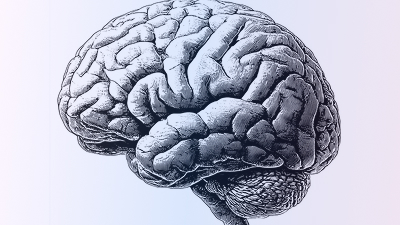
When we write by hand, it is not just one area of the brain working — it is a coordinated network.
At the same time, the following systems become activated:
- Motor cortex → controls the fine movements of the hand
- Visual system → tracks the shapes of letters
- Language centers → process words and meaning
- Memory networks → store and retrieve information
- Attention systems → maintain focus
This means that handwriting is not simply recording information — it is a complex, integrated brain process.
What Do Studies Say?
One of the best-known studies (Mueller & Oppenheimer, 2014) showed that:
- students taking notes on laptops recorded more information
- students writing by hand demonstrated deeper understanding
Why?
Because handwriting does not allow effortless word-for-word copying. The brain is forced to process the information.
Neural Connections: Not Just More, but Richer
An EEG-based study (Van der Weel & Van der Meer, 2020) found that:
- broader brain networks become activated during handwriting
- stronger connections are formed between different brain regions
This matters because learning is not determined by the amount of information, but by how strongly it becomes connected within the brain.
The Connection Between Movement and Thinking
One of the key elements of handwriting is movement.
The fine, precise movements of the hand:
- provide continuous feedback to the brain
- spread thinking out over time
- create a rhythm for processing information
This rhythm is largely absent in typing, where movements are more automated and less differentiated.
Why Does This Matter in Everyday Life?
During handwriting, the brain:
- processes information more actively
- connects multiple sensory channels
- creates more stable neural patterns
Over time, this can result in:
- better memory
- deeper understanding
- more effective learning
- stronger cognitive connections
What Happens If We Abandon It Completely?
If we work exclusively in digital formats:
- motor involvement decreases
- neural activity becomes simplified
- the opportunity for deep processing weakens
This does not mean technology is “bad” — it simply means we lose something if handwriting disappears entirely.
In Summary
Handwriting is not merely a method of recording information — it is neurological training that simultaneously activates movement, vision, language, and memory. That is what makes it so powerful.
Today, the real question is no longer whether we should write by hand or by keyboard, but rather when it is worth returning to handwriting if we truly want to understand and remember something.
References
- Mueller & Oppenheimer (2014) – Psychological Science
- Van der Weel & Van der Meer (2020) – Frontiers in Psychology
- James & Engelhardt (2012) – Trends in Neuroscience and Education