
How Many Trees and How Much Water Do We Use for Note-Taking – and How Can You Reduce It?
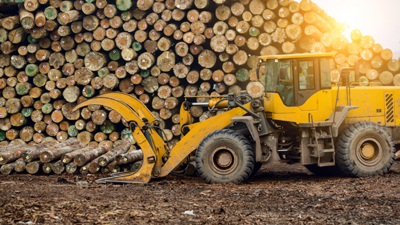
Behind Every Sheet of Paper, There Is a TREE
Paper is made from trees. That is not news.
What is much harder to visualize, however, is the scale of it.
On average, one tree can produce roughly 8,000–10,000 sheets of paper. At first glance, that sounds like a lot — but when we break it down into everyday use, the picture changes.
An average notebook contains around 80–100 pages. If during a university degree we use 40–60 notebooks, that adds up to:
- approximately 4,000–5,000 pages of paper
Which means:
- nearly half a tree disappears — just for note-taking
It is not dramatic. We do not hear the tree fall. But the impact is still real.
The Invisible Resource: WATER
Even if we can picture the trees, there is another resource that is far less tangible: water.
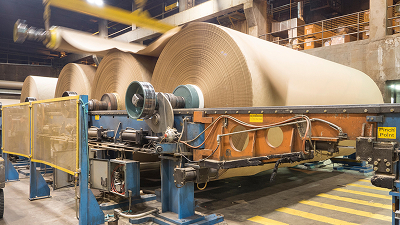
Paper production is one of the largest industrial consumers of water. During manufacturing, wood is turned into pulp, cleaned, treated, and processed — all using enormous amounts of water.
According to average estimates:
- producing 1 kg of paper requires 10–20 liters of water
Translated into notebooks, this roughly means:
- producing a single notebook requires about 2–5 liters of water
What Does This Mean During a University Degree?
Returning to the numbers from our previous examples:
- 40–60 notebooks during one course of study
In terms of water usage, this equals:
- 100–250 liters of water
That is no longer a negligible amount.
This is roughly equivalent to:
- a small bathtub full of water
- or dozens of showers
And all of this happens without us even noticing it.
Why Does This Matter More Than Ever?
Water is becoming an increasingly valuable resource. We talk about it more, it is becoming more expensive, and we need to use it more consciously.
While we try to take shorter showers or waste less water directly, we still consume huge amounts indirectly — for example through paper products.
This is exactly the kind of consumption that is easy to ignore because we do not see it.
What Does a Reusable Notebook Mean in This Context?
A reusable notebook is not only a matter of convenience or saving money. It represents a different mindset.
It is not about taking fewer notes.
It is about:
- no longer continuously creating demand for new paper.
If you use a single notebook for many years, you:
- reduce paper consumption
- reduce the number of trees affected by your consumption
- significantly lower your indirect water usage
The Difference May Not Be Dramatic — but It Adds Up
One notebook may not seem like much. One decision may not seem significant either.
But when this repeats over the years, the impact accumulates.
- one notebook instead of dozens
- a fraction of the water instead of hundreds of liters
- practically zero trees instead of half a tree
That is no longer a small difference.
In Summary
Note-taking does not initially seem like an environmental issue. But once we look behind it, it becomes one.
During a university education:
- we use thousands of sheets of paper
- up to half a tree may be consumed
- and hundreds of liters of water are lost during production
A reusable notebook breaks this chain.
Sustainability is often a series of complicated decisions. But sometimes it begins in surprisingly simple places.
For example, the next time you choose not to buy a new notebook — and continue using the same one instead.